7 main screens in the app
Same structure as the Voice Studio interface
Voice Cloning
Clone a voice from a 5–10s sample.
Voice Design (TTS)
Create a new voice by attributes — no sample needed.
Multi-Voice Dialogue
Multiple characters, one voice each. Podcasts, audio drama.
Speech-to-Text
Transcribe speech, export .txt or .srt.
Translate
Translate .srt with an LLM — timing and line count stay locked.
Model Manager
Download TTS/ASR models, pick an LLM, check your hardware.
Webhook API
Run a local server so n8n, Make or Story Machine can call in.
Voice Library — 30 factory voices, shared across all 3 audio tabs
Ships with <b>30 factory voices</b> (male/female, varied tones). Save your own, click <b>⭐</b> to pin favorites. Available in Voice Cloning, Voice Design and Multi-Voice Dialogue. Backup / restore via portable <code>.vcp</code> files to share across machines.
See it for yourself
Live screenshots of the running app — not mockups.
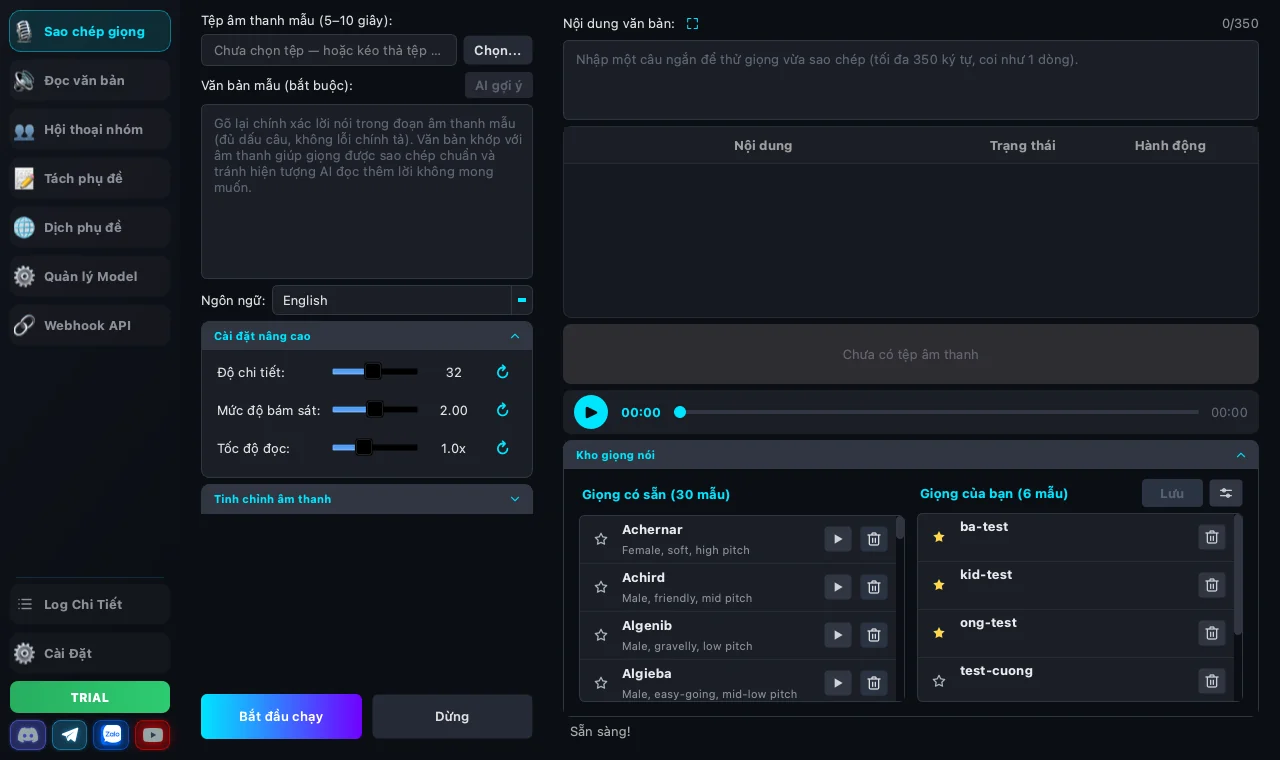
Voice Clone
The 5–10 second sample sits on the left, the text to read on the right. The <b>Voice Library</b> underneath holds 30 built-in voices plus the ones you save.
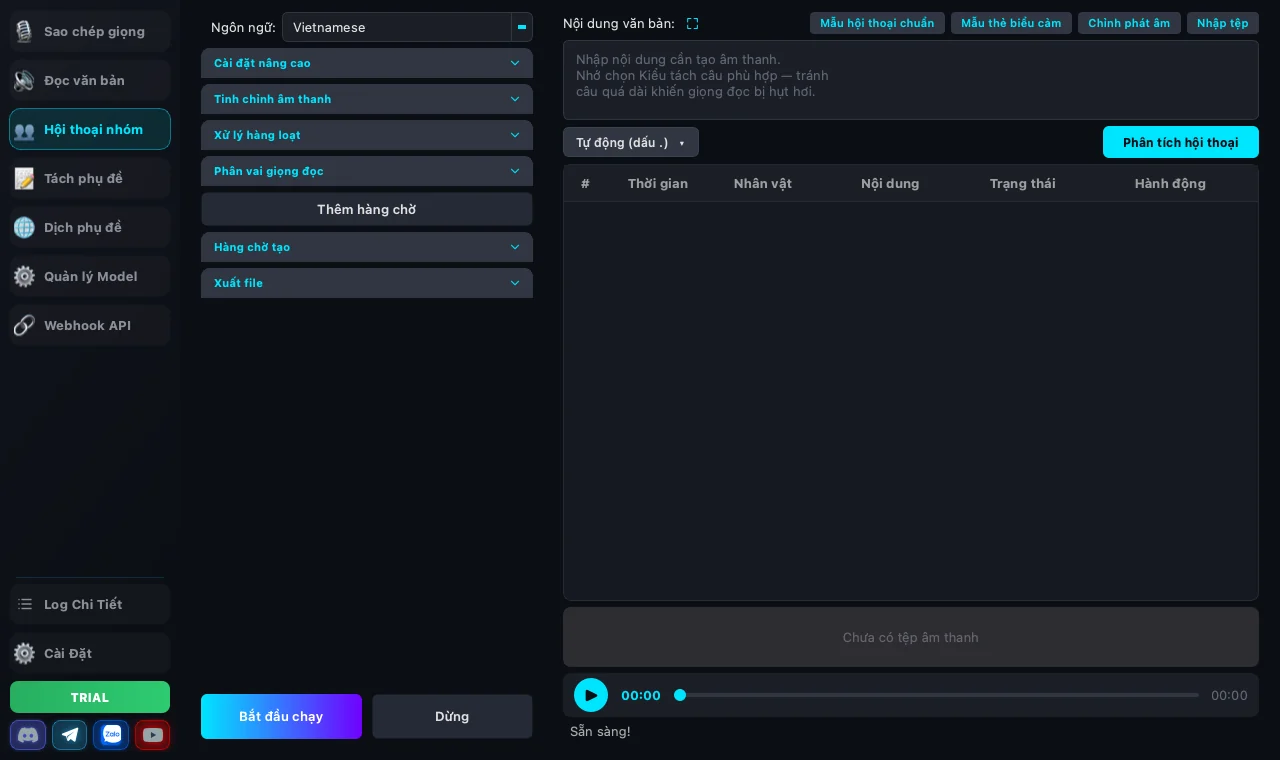
Group Dialogue
Write the script as <code><Name>: line</code>, cast a separate voice for every character, then push the whole script into the <b>render queue</b>.
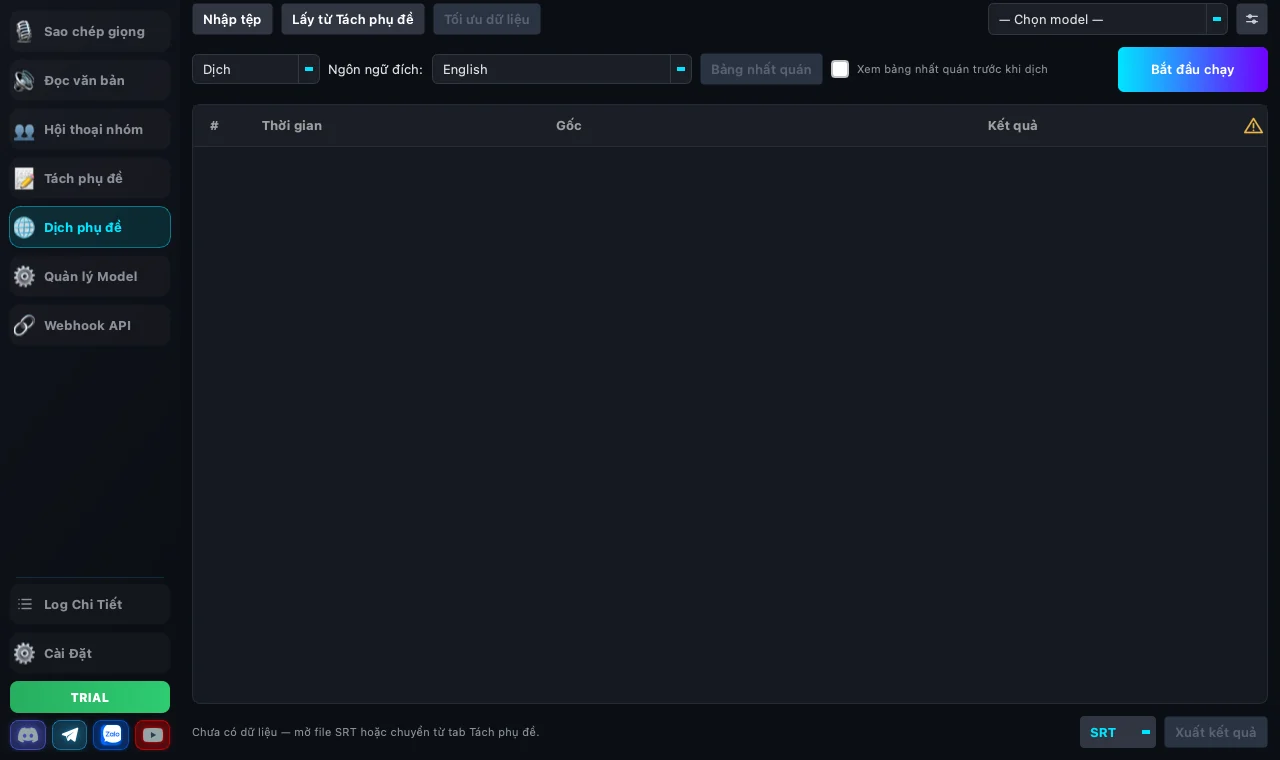
Subtitle translation with an LLM
Line count and timecodes are <b>immutable</b> — the AI may only change the words. A consistency table locks register, terminology and forms of address across the whole file.
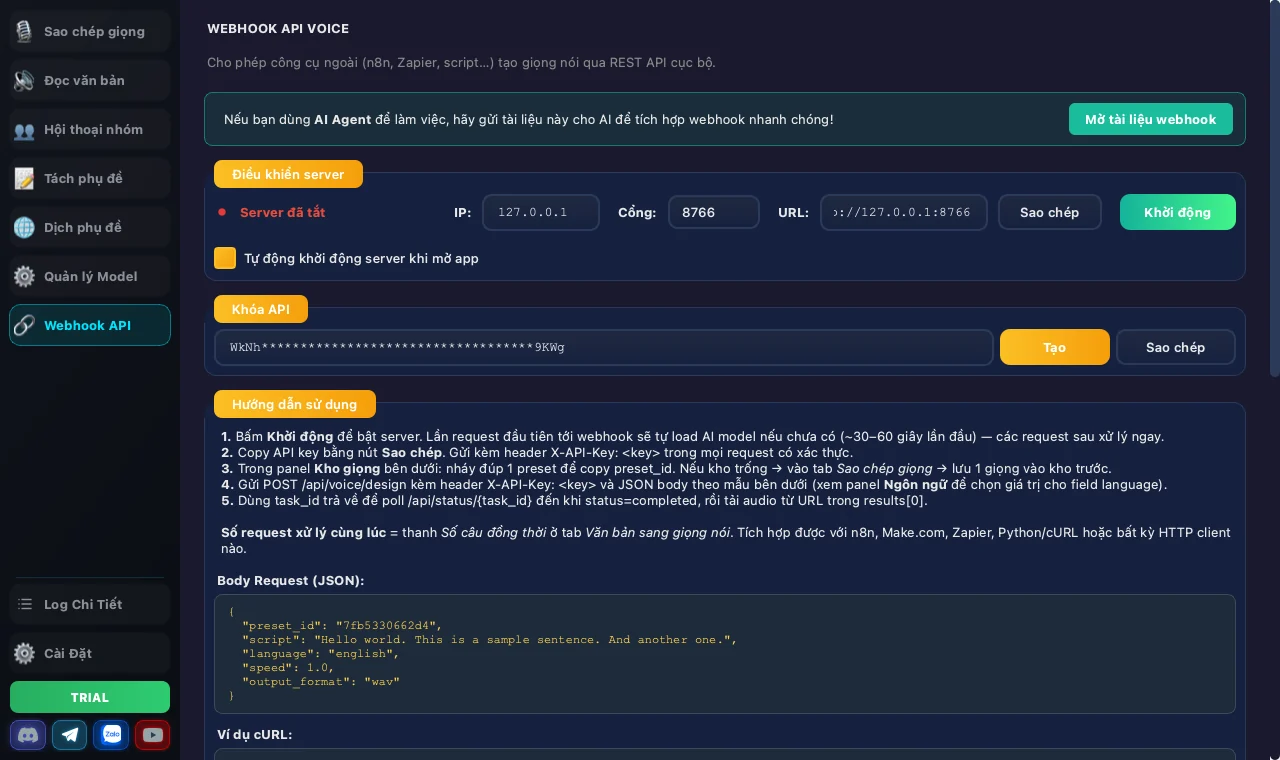
Webhook API
Start the local server and let n8n, Make, a Python script — or <b>G-Labs Story Machine</b> — call in for audio. API key, sample body and a cURL example are right there.
Voice-generation flow
From sample audio to WAV / MP3
- 🎧 01 Pick sample audio
- ⌨ 02 Enter sample transcript<br><small>(or ✨ AI suggest)</small>
- 📋 03 Add script to the table
- ▶ 04 Start generating
- 💾 05 Export audio<br><small>(or ⬇ per row)</small>